Quality Concrete Driveway Installations in Yukon, Oklahoma
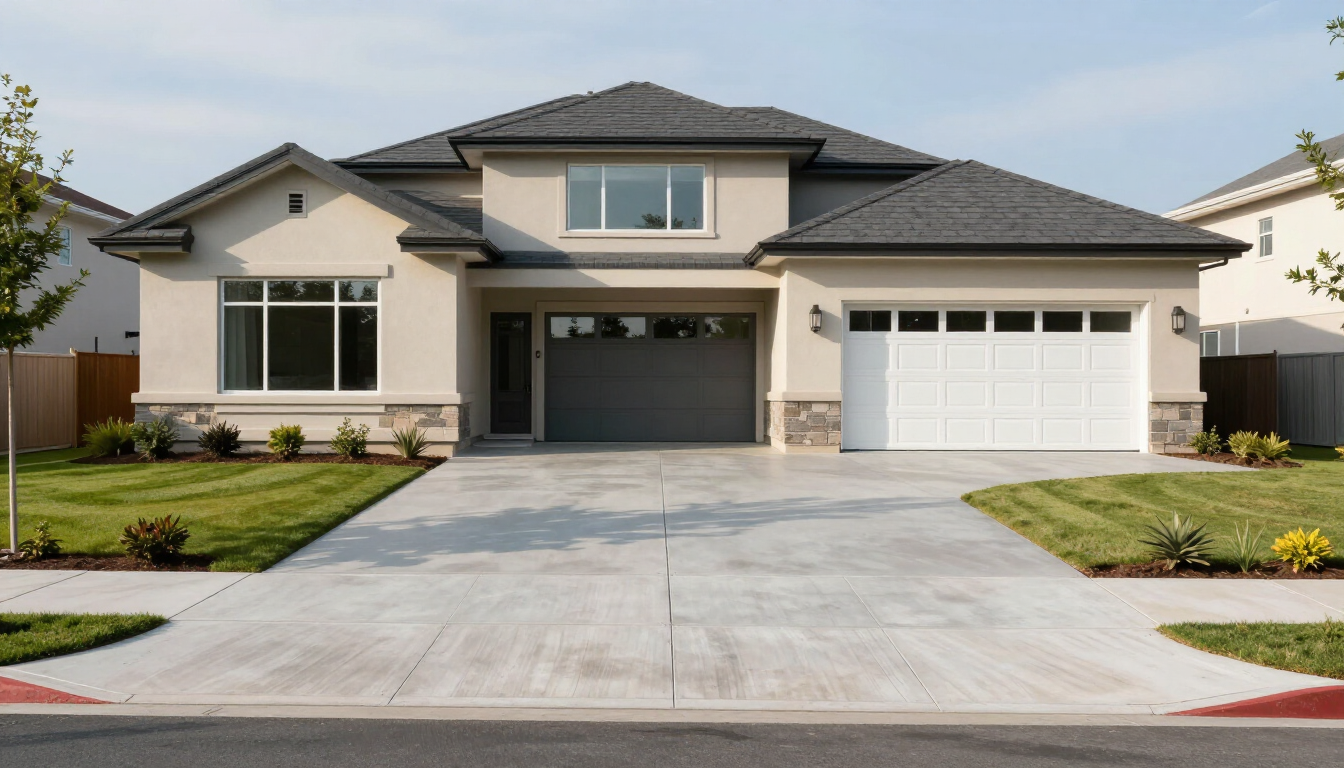

A driveway is one of the hardest-working concrete surfaces on a residential property. Cars and trucks repeatedly travel across the same sections, tires turn while vehicles are stopped or moving slowly, water flows over and around the slab, and the surface remains exposed to Oklahoma weather every day of the year. Over time, all of that can take a toll, particularly when the concrete underneath wasn't properly prepared for the conditions of the property.
In Yukon, what's happening below the driveway can be just as important as what happens on top of it. Clay-rich soils found throughout central Oklahoma can change as moisture levels rise and fall, expanding during wetter periods and shrinking as the ground dries. Combine that movement with hot summers, drought conditions, thunderstorms, occasional freezes, and substantial temperature changes, and a poorly supported driveway can eventually develop cracking, settlement, separation, or uneven areas.
If your driveway is deteriorating, sinking, no longer large enough for your vehicles, or simply ready to be replaced, Yukon Concrete Contractor can help you determine the right approach for the property. We provide new concrete driveway installation, complete driveway replacement, extensions, widening, and repair services throughout Yukon, Oklahoma.
What We Cover:
- New Concrete Driveways
- Driveway Replacement & Extensions
- Decorative Finish Options
- Base Preparation & Reinforcement
- Driveway Repair
- Concrete vs. Other Driveway Materials
- Drainage Considerations
- Maintenance & Long-Term Care
Why Proper Driveway Installation Matters
A new driveway can look excellent immediately after installation regardless of how well the work underneath it was performed. The difference often doesn't become apparent until the driveway has experienced several seasons of vehicle traffic, rain, heat, cold, and movement in the supporting soil. That's why preparation deserves just as much attention as finishing the visible surface.
Before concrete is placed, the area needs to be brought to the proper elevation and the material supporting the driveway needs to provide a reasonably stable and consistent base. Drainage should be considered so water isn't routinely collecting alongside the slab, flowing toward the garage, or contributing to erosion underneath the concrete. Slab thickness, reinforcement, control-joint placement, and the finish should also be selected with the actual use of the driveway in mind.
These details are particularly relevant around Yukon because of the conditions common throughout central Oklahoma. Long stretches of summer heat can be followed by thunderstorms that quickly introduce significant amounts of moisture into the soil, while dry periods can have the opposite effect. Clay-heavy soils respond to those moisture changes, which can create movement beneath a driveway over time. Proper preparation can't eliminate every possibility of cracking or settlement, but it can provide more consistent support and reduce problems that could otherwise have been avoided.
It's also important to have realistic expectations about concrete. No responsible concrete contractor should tell you that a driveway is guaranteed never to crack. Concrete naturally shrinks as it cures and continues responding to changes in temperature, moisture, loads, and the material supporting it throughout its life. Good installation is about managing those forces through preparation, reinforcement, appropriate thickness, drainage, and properly located joints rather than pretending they don't exist.
Concrete Driveway Design & Finish Options
For many Yukon homes, a traditional broom-finished driveway is still the most practical option. The lightly textured surface provides useful traction, works well for everyday vehicle traffic, and generally costs less than more decorative alternatives. If the primary goal is a durable place to park and drive, there may be little reason to make the project more complicated.
That doesn't mean every driveway has to look the same. Because a driveway can occupy a significant portion of the front of a home, some homeowners choose decorative details to make the concrete work better with the exterior design, landscaping, or other hardscaping around the property.
- Broom-Finished Concrete: A straightforward textured finish commonly used on residential driveways because it provides traction and keeps the overall design relatively simple.
- Stamped Concrete: Patterns and textures can be added to create an appearance inspired by stone, brick, slate, or pavers while maintaining a concrete slab underneath.
- Colored Concrete: Pigments and other coloring systems can change the traditional gray appearance and help the driveway coordinate with surrounding materials.
- Exposed Aggregate: The upper cement paste is removed to reveal some of the aggregate within the concrete, producing a more textured decorative surface.
- Borders & Bands: Decorative sections can be incorporated along edges or across selected areas without applying an upgraded finish to the entire driveway.
- Decorative Saw Cuts: Planned cuts can introduce geometric patterns or visual separation across larger areas of concrete.
Decorative concrete isn't automatically an upgrade in every practical sense. These finishes generally cost more and may come with additional maintenance considerations. Certain colored or decorative surfaces can benefit from periodic sealing, and appearance can change naturally with weather and use. For homeowners primarily interested in function and value, a well-installed broom finish may be the better choice. For properties where the driveway is a prominent part of the home's exterior, decorative details may be worth the additional expense.
Our Concrete Driveway Installation Process
Every driveway project begins with the property. Before determining how the new concrete should be installed, we look at the proposed dimensions, elevations, drainage, vehicle use, surrounding surfaces, and access to the work area. Replacement projects also give us an opportunity to consider why the old driveway failed rather than assuming the replacement should simply duplicate what was there before.
When an existing driveway needs to be removed, the old concrete is broken apart and hauled away so the area underneath can be evaluated and prepared. If portions of the driveway experienced significant settlement or cracking, we can look for conditions that may have contributed to it, such as poor support, drainage problems, erosion, or movement in the surrounding soil.
For new installations, extensions, and replacements, excavation and grading are completed as necessary to establish the required depth and elevations. The supporting area is prepared and compacted, forms establish the shape of the driveway, and reinforcement is installed according to the requirements of the project. Concrete is then placed, brought to grade, consolidated where appropriate, and finished.
Control joints are incorporated at planned locations to help manage shrinkage as the concrete cures. These joints don't make cracking impossible, but they create intentional locations where cracks are more likely to form instead of leaving large uninterrupted sections of concrete to crack wherever stresses happen to concentrate.
Once finishing is complete, curing begins. A driveway may look solid relatively soon after the pour, but concrete continues developing strength well after the surface becomes hard. Walking on a driveway places far less stress on it than parking a pickup truck or SUV, so those activities shouldn't necessarily resume at the same time. We'll explain the appropriate timeline for foot traffic and vehicles based on the conditions and concrete involved with your project.
Driveway Replacement, Extensions & Repairs
Not every driveway problem requires tearing everything out and starting again. The appropriate solution depends on the condition of the existing slab, the extent of the damage, and what you're trying to accomplish with the property.
If your current driveway is structurally sound but doesn't provide enough room, an extension or widening project may be a practical option. Additional concrete can create space for another vehicle, a pickup or trailer, improve access around parked cars, or extend the driveway toward a detached garage, workshop, or other area of the property.
An extension still needs to be treated as a proper concrete installation. Pouring directly over an unused portion of the yard without considering excavation, base preparation, thickness, drainage, reinforcement, and joints can create unnecessary problems later. The connection between the new and existing concrete also needs to be considered as part of the layout.
Repairs depend more heavily on the cause and severity of the damage. A small stable crack, chipped edge, or isolated area of surface deterioration may be repairable without replacing the entire driveway. Widespread cracking, substantial settlement, severe deterioration, or continued movement can indicate a larger issue that a simple repair won't correct.
Finding the cause matters. Filling a crack doesn't stop unstable soil from moving underneath it, resurfacing doesn't lift a significantly settled slab back into proper position, and replacing one small section won't necessarily fix a drainage problem affecting the entire driveway. We evaluate the condition and likely cause before discussing repair, partial replacement, or complete replacement.
Is a Concrete Driveway Right for Your Yukon Home?
Concrete is a popular driveway material for good reason, but that doesn't mean it's automatically the best choice for every property or budget. Understanding the advantages and disadvantages makes it easier to compare it with asphalt, gravel, or other alternatives.
Concrete provides a rigid paved surface, requires relatively little routine maintenance, offers numerous finish options, and can provide a long service life when properly designed, installed, and maintained. It also handles Oklahoma summer heat differently from asphalt and won't soften during high temperatures in the same way asphalt can.
The tradeoff is that concrete generally requires a larger upfront investment. It also needs adequate curing time before normal vehicle use and should be expected to develop some cracking over its life. Repairs can remain visible because new concrete rarely matches the exact color, texture, and weathering of an older slab.
Asphalt can make sense when keeping initial paving costs lower is particularly important, while gravel may be practical for longer driveways or larger properties where paving the entire distance would become expensive. Concrete tends to appeal to homeowners who want a more permanent paved surface, relatively straightforward maintenance, and the ability to choose from standard or decorative finishes.
The goal isn't to claim concrete is always the correct answer simply because it's the service we provide. If you're comparing materials, we can help explain the practical differences so you can determine what makes sense for your property.
What Determines the Cost of a Concrete Driveway?
The cost of a concrete driveway in Yukon depends on considerably more than multiplying the square footage by a single advertised price. Overall size certainly matters because larger driveways require more concrete and labor, but two driveways with identical dimensions can still require very different amounts of work.
Common factors affecting driveway pricing include:
- Total square footage
- Required slab thickness
- Removal and disposal of existing concrete
- Excavation and grading
- Base preparation
- Reinforcement
- Equipment and truck access
- Drainage work
- Concrete quantity and mix requirements
- Standard or decorative finishing
- Curves and more complicated forming
- Decorative borders, bands, or other details
- Connections with garages, sidewalks, streets, or existing slabs
Access is one factor homeowners sometimes overlook. A project that concrete trucks and equipment can reach easily may be relatively straightforward to complete. Restricted access can require additional labor, different equipment, or pumping to move concrete where it needs to go.
Replacement projects also involve a substantial amount of work before any new concrete becomes visible. The existing driveway has to be broken apart, loaded, hauled away, and disposed of before the underlying area can be prepared for the new installation. That makes an evaluation of the actual property far more useful for estimating costs than relying on a generic square-foot number.
Driveway Drainage in Yukon
Drainage should be considered anytime a driveway is installed, extended, or replaced. A driveway creates a large surface that doesn't absorb rainfall the way an open yard does, which means a significant amount of runoff can move across it during a heavy Oklahoma storm.
Where that water goes depends largely on the elevations and slope of the driveway as well as the surrounding property. Ideally, runoff should have a practical route toward an appropriate drainage area rather than consistently pooling in front of the garage, collecting along slab edges, washing supporting material away, or being redirected toward the foundation.
Street elevations, sidewalks, neighboring properties, existing landscaping, garage height, and the grade of the yard can all affect what is possible. That's why an existing drainage problem shouldn't simply be hidden underneath a replacement driveway. If the old concrete regularly holds water or directs runoff somewhere problematic, replacing it provides an opportunity to determine whether changes to the grade or layout can improve the situation.
Maintaining a Concrete Driveway
Concrete generally doesn't require complicated routine maintenance, but basic care can help keep the surface looking better and reduce unnecessary deterioration. Dirt, leaves, and organic debris shouldn't be allowed to accumulate indefinitely, and automotive fluids such as oil or fuel are easier to address when they're cleaned relatively quickly rather than left to soak into the surface.
Care should also be taken with chemicals used on concrete. Oklahoma doesn't experience the prolonged winter conditions found farther north, but freezing weather and ice still occur. Some deicing chemicals can contribute to surface deterioration, particularly on newer concrete, so it's worth understanding what products are appropriate before applying them.
Whether sealing makes sense depends on the type of concrete and finish. Decorative, colored, stamped, and exposed-aggregate surfaces may have different maintenance recommendations from a conventional broom-finished driveway. Rather than treating every slab the same way, we'll explain what applies to the finish you've actually selected.
Planning a New Concrete Driveway in Yukon?
Whether you're replacing an older driveway near central Yukon, widening the parking area at a newer home, extending concrete toward a detached garage or workshop, or trying to figure out whether a cracked and settled driveway can reasonably be repaired, the best place to start is with the property itself.
We'll look at the existing concrete, grade, drainage, surrounding surfaces, access, and the way you use the driveway before discussing the available options. You don't need to know beforehand whether the answer is a small repair, partial replacement, extension, widening project, or completely new driveway. That's part of what the initial evaluation is intended to determine.
Contact Yukon Concrete Contractor today to discuss your driveway project and request a free, no-obligation estimate.