Custom Concrete Patio Installations in Yukon, Oklahoma
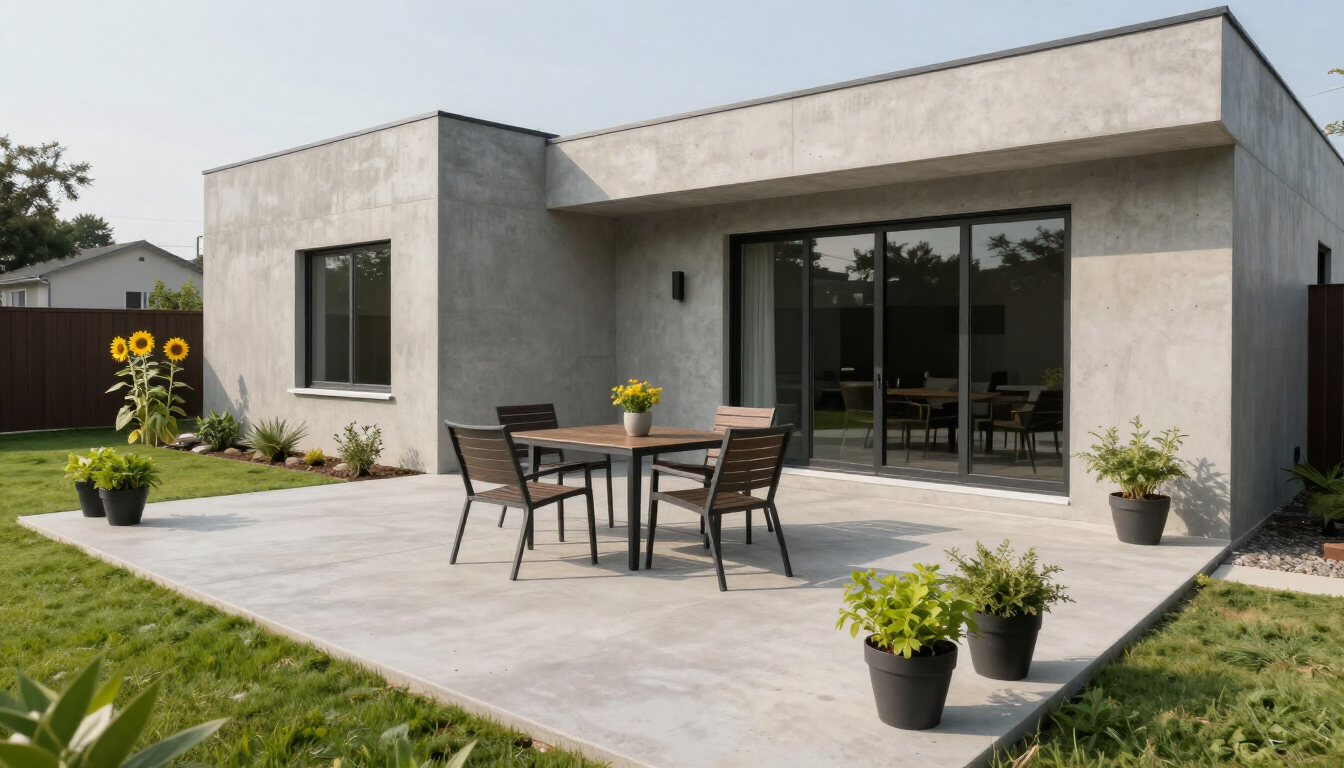

A backyard patio should be more than a rectangle of concrete behind the house. It's often where the grill ends up, where people eat outside, where patio furniture stays year-round, or where friends and family gather when the weather is nice. For some homeowners, it's a simple place for a table and a few chairs. For others, the patio becomes the foundation of a larger outdoor living area with multiple seating spaces, a fire feature, outdoor kitchen, pergola, or other improvements.
Yukon Concrete Contractor installs concrete patios throughout Yukon, Oklahoma, with each project planned around the available space, how the homeowner intends to use it, and the conditions of the property. That includes thinking about more than the visible finish. Central Oklahoma's clay-rich soils, changing moisture levels, strong thunderstorms, summer heat, and occasional freezing temperatures make preparation beneath the slab important, while proper grading helps ensure the new patio works with the existing drainage of the yard instead of creating a new problem.
What We Cover:
- New Concrete Patio Installation
- Patio Layout & Design
- Decorative & Stamped Concrete
- Drainage & Site Preparation
- Concrete Patio Extensions
- Concrete Patio Repair
- Maintenance & Long-Term Care
Planning a Concrete Patio Around How You'll Actually Use It
One of the best ways to plan a patio is to start with what will eventually be sitting on it. It's easy to mark a square or rectangle in the backyard and think it looks large enough, but furniture changes how that space feels very quickly. A patio intended for two chairs and a small grill can remain relatively compact, while an outdoor dining table, full seating area, grill, planters, fire pit, and walking paths can require considerably more room.
Think about how people will move between the house and yard as well. Exterior doors, steps, side gates, fences, air-conditioning equipment, landscaping, rooflines, existing sidewalks, and the natural grade of the property can all influence where a patio fits most naturally. A good layout should provide enough usable space without making normal movement through the backyard awkward.
This can be particularly important in newer Yukon neighborhoods where homes may have fenced backyards, drainage easements, utilities, neighboring properties, and other improvements occupying a relatively limited amount of space. Larger properties can provide more flexibility with size and placement, but they can also introduce different challenges involving elevation, drainage, and getting equipment or concrete to the work area.
Water should be part of the conversation from the beginning. Oklahoma thunderstorms can put a large amount of rainfall onto a property quickly, and replacing an area of lawn with concrete changes how that water behaves. A patio beside the house should generally encourage runoff to move away from the structure without simply directing it toward a fence, neighboring property, or low area elsewhere in the yard. We consider the existing grade and surrounding surfaces when determining the elevation and slope of the new patio.
Concrete Patio Design & Finish Options
Concrete provides plenty of flexibility when it comes to appearance. A simple broom finish remains one of the most popular choices because it's functional, provides traction, requires relatively straightforward maintenance, and keeps the cost lower than most decorative alternatives. For homeowners who want the patio to become a more prominent design feature, decorative finishes can change the look considerably.
- Broom-Finished Concrete: A practical textured surface that works well when durability, traction, simplicity, and cost are the main priorities.
- Stamped Concrete: Patterns and textures can create an appearance inspired by flagstone, slate, brick, pavers, and other materials.
- Colored Concrete: Coloring systems can introduce warmer earth tones, darker shades, or other colors that work with the home's exterior and landscaping.
- Exposed Aggregate: Exposing some of the aggregate within the surface gives the patio additional texture and visual variation.
- Decorative Borders: A contrasting border can add visual detail without requiring a decorative treatment across the entire slab.
- Saw-Cut Patterns: Planned decorative cuts can break up larger areas and introduce simple geometric designs.
There's no single finish that's best for every backyard. Stamped and colored concrete can create a much more customized space, but the additional materials and finishing work generally increase the price. Certain decorative surfaces may also benefit from periodic sealing or additional maintenance to preserve the appearance.
It's worth considering how much of the concrete you'll actually see once the patio is furnished. If most of the surface will eventually be occupied by a dining set, outdoor rugs, couches, planters, grills, and other furniture, spending substantially more on an elaborate finish across every square foot may not provide much additional value. On the other hand, a large exposed patio that's intended to be a major visual feature of the backyard may justify a more decorative approach.
Our Concrete Patio Installation Process
After the dimensions, location, elevations, and finish have been determined, the physical work begins with preparing the site. Depending on the existing yard, that may involve removing grass and topsoil, demolishing an old patio, excavating to the appropriate depth, adjusting the grade, and removing material that isn't suitable to support the new slab.
The supporting area is then prepared and compacted as required, forms are installed to establish the patio's dimensions and elevations, and reinforcement is placed when appropriate. This stage isn't the part of the project people usually get excited about, but it can have a significant influence on how the patio performs after installation. Clay-heavy soils common throughout central Oklahoma can change volume as moisture conditions change, so establishing consistent support underneath the slab deserves careful attention.
Once preparation is complete, concrete is placed, leveled, and finished according to the selected surface. Control joints are incorporated to provide planned locations for the shrinkage that naturally occurs as concrete cures. Decorative projects can require additional steps for coloring, stamping, texturing, borders, or other selected details.
The final stage is curing. A patio can look completely finished while the concrete is still developing strength. Furniture, grills, large planters, hot tubs, and other heavy items shouldn't automatically be placed back on the surface as soon as it feels hard. We'll explain when the patio can reasonably be walked on and when heavier items can return based on the installation and conditions.
Is a Concrete Patio Right for Your Yukon Home?
Concrete works particularly well for homeowners looking for a durable outdoor surface at or relatively close to ground level. It doesn't rot like wood, doesn't have individual units that can shift and require resetting like some paver installations, and can be formed into a wide range of shapes and dimensions. It also creates a stable surface for tables, grills, seating, planters, and other common backyard features.
There are situations where another material may make more sense. Pavers can be attractive if you specifically want the appearance of individual stones or units and value the ability to remove and replace individual sections. A raised wood or composite deck may be considerably more practical when an exterior door sits several feet above the yard or when the property has a substantial elevation change that would make a ground-level patio difficult to connect naturally with the home.
Concrete generally makes the most sense when you want a permanent-feeling, relatively low-maintenance surface near ground level. Understanding those differences beforehand is better than choosing a material first and then trying to force it into a property where another option would work better.
Patio Size, Layout & Outdoor Living
Making a patio too small is an easy mistake because an empty area can feel considerably larger than a furnished one. A 10-by-10 or 12-by-12 space may sound generous until a table, chairs, grill, planters, and normal walking space are added.
Before choosing dimensions, think about the actual footprint of the things you want to use. Dining chairs need enough space to slide backward without falling off the slab. A grill needs room for someone to stand and cook without blocking the main walkway. Seating groups need enough separation for people to move comfortably around them, and exterior doors and gates should have clear paths that aren't constantly obstructed by furniture.
If you're imagining several distinct uses, it can help to think of the patio as a small floor plan. The dining area can occupy one portion, seating another, and cooking another, with enough circulation space to connect everything naturally. This doesn't necessarily mean building an enormous patio. It means using the available square footage intentionally.
Existing patios can sometimes be expanded instead of removed. If the current slab remains stable and the primary problem is simply that it isn't large enough, adding concrete alongside it may create the extra space you need. The new concrete will generally remain visually distinguishable from the old because fresh concrete won't perfectly match years of weathering, but planned dimensions and joint locations can make the addition feel intentional.
Future improvements should also be discussed before the pour. If you're considering an outdoor kitchen, pergola, patio cover, hot tub, permanent fire feature, or another substantial addition, knowing that beforehand can affect the patio layout, slab design, reinforcement, footings, and utility planning. Installing conduit or making other preparations before the concrete is placed can be much easier than cutting into a finished patio later.
Concrete Patio Drainage in Yukon
Drainage may not be the most exciting part of designing a patio, but poor drainage can quickly make an otherwise attractive outdoor space frustrating to use. Concrete doesn't absorb rainfall the way an open section of lawn can, so every gallon of water landing on the patio needs somewhere to go.
The patio should generally have enough slope to move water away from the home while remaining comfortable for furniture and everyday use. From there, the surrounding property needs an appropriate place for that runoff to continue. The goal isn't simply to get water off the concrete as quickly as possible if doing so sends it toward the foundation, neighboring property, fence line, or another low spot.
Downspouts should also be considered. If a downspout already discharges near the proposed patio, changing the surrounding area from soil or grass to concrete can alter how that concentrated water moves. Depending on the property, drainage may be straightforward or complicated by a relatively flat yard, neighboring homes, existing sidewalks, fences, landscaping, or other hard surfaces.
Those conditions are much easier to consider before the forms are set than after a finished patio is already in place.
Concrete Patio Repair & Replacement
A cracked patio doesn't automatically need to be removed. Concrete naturally experiences some cracking, and smaller stable cracks can sometimes remain primarily an appearance issue. Chipped edges and certain areas of localized surface damage may also be reasonable candidates for repair.
Other types of damage deserve a closer look. Significant settlement, widespread cracking, sections that have shifted to different elevations, recurring movement, or a patio that now directs water toward the house can indicate a problem that extends beyond the surface.
The cause helps determine what makes sense next. Filling a crack may improve appearance and limit water intrusion, but it won't stabilize soil that continues moving underneath the slab. Resurfacing can improve some surface conditions but doesn't correct major settlement. If drainage, erosion, soil movement, or inadequate support caused the original problem, those conditions should be considered before investing in a repair.
When a patio has extensive deterioration, substantial settlement, major elevation problems, or drainage that can't reasonably be corrected while preserving the existing slab, replacement may provide a more practical long-term solution. We look at both the visible damage and the likely reason it occurred before discussing the options.
What Determines the Cost of a Concrete Patio?
Patio pricing depends on the amount of concrete involved, but square footage alone doesn't tell the whole story. Two patios of exactly the same size can have very different installation requirements depending on where they're located and what needs to happen before concrete can be poured.
A simple rectangular patio in an open area with easy equipment access and minimal excavation is very different from a patio behind a fully fenced home with a narrow side yard, an existing slab that needs to be demolished, elevation changes, difficult drainage, and no practical way for a concrete truck to approach the work area.
Factors that commonly affect concrete patio pricing include:
- Total square footage
- Excavation and grading
- Removal and disposal of existing concrete
- Backyard and equipment access
- Base preparation
- Concrete thickness
- Reinforcement
- Drainage requirements
- Steps and elevation changes
- Curves or complex forming
- Standard versus decorative finishes
- Stamping and coloring
- Decorative borders and patterns
- Concrete pumping when required
A basic rectangular patio with a conventional broom finish will generally be one of the more economical configurations. Curves, multiple elevations, stamped finishes, coloring, decorative borders, and complicated layouts require additional materials or labor and can increase the overall price.
The most expensive version isn't automatically the best patio. We can help you determine which features meaningfully improve the space for the way you intend to use it and where keeping the design simpler could accomplish essentially the same goal for less.
Maintaining Your Concrete Patio
Routine maintenance for a concrete patio is generally straightforward. Keeping the surface reasonably clean and removing leaves, dirt, and organic debris before they sit for extended periods can help prevent unnecessary staining. Spills are also easier to deal with when they're cleaned relatively quickly, and chemicals that aren't intended for concrete should generally be avoided.
Decorative patios may require more attention depending on the finish. Certain stamped or colored systems may benefit from periodic resealing to maintain their appearance, while a conventional broom-finished patio can typically remain much simpler.
It's also worth occasionally looking beyond the concrete itself. Properties change over time. Landscaping grows, soil settles, downspouts get moved, neighboring lots are developed, and additional patios, sheds, sidewalks, pools, or other improvements can change drainage patterns. If water suddenly begins collecting along one edge of a patio or moving toward the house when it didn't previously, finding out why early can help prevent a small drainage issue from becoming a larger one.
Planning a Concrete Patio in Yukon?
Whether you're starting with an empty backyard at a newer Yukon home, replacing a patio that has cracked and settled over the years, or simply trying to make an existing outdoor space larger and more useful, we'll help you determine what makes sense for the property.
We'll talk about how you want to use the space, consider the available dimensions, equipment access, existing grade, drainage, and surrounding improvements, and explain the practical differences between the available finish options. From there, the project can be planned around the actual backyard rather than an arbitrary patio size or design.
A good concrete patio doesn't have to be elaborate. It needs enough room for what you want to do, a layout that works naturally with the house and yard, proper support underneath it, and drainage that sends water where it should go.
Contact Yukon Concrete Contractor today to discuss your patio project and request a free, no-obligation estimate.